Sunday, May 24, 2015

Ireland votes to legalize gay marriage in landslide

‘Bold’ Ireland votes to legalize gay marriage in landslide - The Washington Post

DUBLIN — Ireland’s citizens have voted in a landslide to legalize gay marriage, electoral officials announced Saturday — a stunningly lopsided result that illustrates what Catholic leaders and rights activists alike called a “social revolution.”

Friday’s referendum saw 62.1 percent of Irish voters say “yes” to changing the nation’s constitution to define marriage as a union between two people regardless of their sex. Outside Dublin Castle, watching the results announcement in its cobblestoned courtyard, thousands of gay rights activists cheered, hugged and cried at the news.

“With today’s vote, we have disclosed who we are: a generous, compassionate, bold and joyful people,” Prime Minister Enda Kenny proclaimed as he welcomed the outcome. Beside him, Deputy Prime Minister Joan Burton declared the victory “a magical moving moment, when the world’s beating heart is in Ireland.”

Ireland is the first country to approve gay marriage in a popular national vote. Nineteen other countries have legalized the practice through their legislatures and courts.

The unexpectedly strong percentage of approval surprised both sides. More than 1.2 million Irish voters backed the “yes” side to less than 750,000 voting “no.” Only one of Ireland’s 43 constituencies recorded a narrow “no” majority, Roscommon-South Leitrim in the boggy midlands.

Analysts credited the “yes” side with adeptly employing social media to mobilize young, first-time voters, tens of thousands of whom voted for the first time Friday. In addition, a series of searing personal stories from prominent Irish people — either coming out as gays or describing their hopes for gay children — convinced voters to back equal marriage rights.

Both Catholic Church leaders and gay rights advocates said the result signaled a social revolution in Ireland, where only a few decades ago the authority of Catholic teaching was reinforced by voters who massively backed bans on abortion and divorce in the 1980s.

Voters first legalized divorce only by a razor-thin margin in 1995 and now, by a firm majority, they have rejected the Catholic Church’s repeated calls to reject gay marriage. Abortion, still outlawed, looms as the country’s next great social policy fight.

Dublin Archbishop Diarmuid Martin said the “overwhelming vote” against church teaching on gay marriage meant that Catholic leaders in Ireland need to urgently find a new message and voice for reaching Ireland’s young.

“It’s a social revolution. ... The church needs to do a reality check right across the board,” Martin said.

“Have we drifted completely away from young people?” he asked. “Most of those people who voted ‘yes’ are products of our Catholic schools for 12 years.”

David Quinn, leader of the Catholic think tank Iona Institute, said he was troubled by the fact that no political party and only a half-dozen politicians backed the “no” cause.

The state of gay rights around the world

“The fact that no political party supported them must be a concern from a democratic point of view,” he said.

Fianna Fail party leader Michael Martin, a Cork politician whose opposition party is traditionally closest to the Catholic Church, said he couldn’t in good conscience back the anti-gay marriage side.

“It’s simply wrong in the 21st century to oppress people because of their sexuality,” he said.

After the result was announced, thousands of celebrants flooded into the Irish capital’s pubs and clubs — none more popular Saturday night than the city’s few gay venues.

At the George, Ireland’s oldest gay pub, drag queens danced and lip-synced to Queen and the founding father of Ireland’s gay rights campaign, Sen. David Norris, basked in the greatest accomplishment of the movement’s 40-year history.

“The people in this small island off the western coast of Europe have said to the rest of the world: This is what it is to be decent, to be civilized, and to be tolerant! And let the rest of the world catch up!” Norris, 70, shouted with jubilant zeal to the hundreds packing the pub.

In the 1970s and 1980s, Norris waged an often lonely two-decade legal fight to force Ireland to quash its Victorian-era laws outlawing homosexual acts. Ireland finally complied in 1993, becoming the last European Union country to do so. This time, the gay community in Ireland managed to build a decisive base of support.

“People from the LGBT community in Ireland are a minority. But with our parents, our families, or friends and co-workers and colleagues, we’re a majority,” said Leo Varadkar, a 36-year-old Irish Cabinet minister who in January announced on national radio that he was gay. “For me it wasn’t just a referendum. It was more like a social revolution.”

Many gay couples took the moment to declare their intentions or renew their vows. One lesbian couple in Limerick proposed on bended knee at the vote count there, while one of Ireland’s most prominent advocates for gay marriage, American-born Sen. Katherine Zappone, asked her wife live on Irish TV: “Today in this new Ireland, Ann Louise Gilligan, will you marry me?”

The couple, who met at Boston College and already were married legally in Canada in 2003, sued Ireland unsuccessfully in 2006 to have their marriage recognized as valid. Once parliament passes enabling legislation by this summer, that Canadian wedding license will become legal in Ireland. But Zappone and Gilligan, a former nun, still plan an Irish ceremony.

“There’s nothing like an Irish wedding,” Zappone said.

Michael Barron and Jaime Nanci, a gay couple legally married in South Africa five years ago, celebrated with friends at the Dublin City counting center.

“Oh.My.God! We’re actually Married now!” Nanci tweeted to the world, part of a cavalcade of tweets from Ireland tagged #LandslideOfLove.

Political analysts who have covered Irish referendums for decades agreed that Saturday’s landslide marked a stunning generational shift.

“We’re in a new country,” said gray-haired political analyst Sean Donnelly. “When I was reared up, the church was all powerful and the word ‘gay’ wasn’t even in use in those days. How things have moved from my childhood to now.”

Copyright 2015 The Associated Press. All rights reserved. This material may not be published, broadcast, rewritten or redistributed.


Sent from my iPhone

Saturday, May 23, 2015

Marriage: Where Do We Go From Here?

Marriage: Where Do We Go From Here?

The pro-marriage case can win — if we don’t give up on it.

In the media’s portrayal, people defending marriage as the union of a man and woman have been getting routed ever since the Supreme Court decision last June — if not before. They point to a string of lower-court rulings striking down state marriage amendments and to public-opinion polling, especially of my peers in the Millennial generation. Many also point to the forced resignation of Brendan Eich and the defeat of Arizona’s religious-liberty bill.

Some people would like me and the millions of Americans who continue to believe that marriage is what societies have believed it to be throughout human history — a male-female union — to get with the program and accept the inevitable. We’re clearly, they tell us, on the Wrong Side of History.

But we should avoid the temptation to prognosticate about the future in lieu of working to shape that future. We are citizens in a self-governing society, not pundits watching a spectator sport, not subjects of rulers. We are participants in one of the most significant debates our society — any society — has ever faced.

So, the question is, where do we go from here? How do we best advance the cause of marriage as the union of a man and woman, husband and wife, father and mother?

Some say we should abandon the defense of marriage and retreat to only protecting religious-liberty exemptions. They argue that this is the best course of action in light of what they take to be an inevitable defeat. Others go further and suggest that we should simply disengage with politics entirely, retreat to our own communities, and rebuild a marriage subculture there.

As tempting as these plans may be, they aren’t the right answer.

We must continue to witness to the truth about marriage, find new ways to make the reasoned case about what marriage is, and work to protect our freedoms to do so for the next generation. All of this must be done in service of the long-term goal of restoring a culture of marriage.

This requires both political and cultural efforts. Those who emphasize religious-liberty protections are somewhat right, for to even have the freedom to build countercultural institutions that preserve the truth about marriage we will at the very least need to protect the liberty — including religious liberty — to do so. But they are wrong in thinking we can protect religious liberty without defending the substantive view we seek the liberty to hold and act on. In order to protect our liberty with respect to marriage, we must persuade our neighbors that our views about marriage are reasonable, and thus that our rights to govern our lives in accord with those views should be respected.

In doing this, we must understand that, for many of our neighbors, the argument for marriage hasn’t been heard and rejected; it simply hasn’t been heard. We must make that argument in new and creative ways.

In the short run, the legal battle over the definition of marriage may be an uphill struggle. But in the long run, those who defend marriage as the union of a man and woman will prove to be prophetic. First, because when people do hear a compelling case for marriage, they respond accordingly. And second, because the logic of marriage redefinition ultimately leads to the dissolution of marriage into nothing more than a social mess of consenting adult love of manifold sizes and shapes.

Those who defend — and live out — the truth about marriage should redouble their efforts to witness to the truth about marriage while there is still time to steer clear of that chaos. Here are six ways to do that.

One. Stand Up for Our Authority as Citizens to Pass Laws Reflecting the Truth about Marriage

Last summer, when the Supreme Court struck down the federal Defense of Marriage Act (DOMA), many cited the Court’s own language to explain the limited reach of the ruling. While the Court ordered the federal government to recognize all state-recognized marriages (including same-sex relationships), the Court declared that “the definition and regulation of marriage has been treated as being within the authority and realm of the separate States.” The states remain free — and should continue — to define marriage as the union of one man and one woman.

Indeed, Chief Justice John Roberts emphasized the limits of the majority’s opinion. He made clear that neither the holding nor its logic required redefining state marriage laws. And Justice Alito made clear the actual constitutional status of marriage laws.

Alito framed the debate as a contest between two visions of marriage — what he calls the “conjugal” and “consent-based” views. Alito cited my book, What Is Marriage? Man and Woman: A Defense, as an example of the conjugal view of marriage: a “comprehensive, exclusive, permanent union that is intrinsically ordered to producing new life.” He cited Jonathan Rauch as a proponent of the consent-based idea that marriage is a commitment marked by emotional union.

Alito explained that the Constitution is silent on which of these substantive visions of marriage is correct. And, so, Alito said, the Court should defer to democratic debate.

At the same time, we should be clear-eyed about what’s coming next. The courts seem intent on disregarding the democratic process and usurping authority away from citizens and their representatives. But the Court will be less likely to usurp the authority of citizens if it is obvious that citizens are engaged in this democratic debate and care about the future of marriage. This is what Justice Scalia predicted: The Court will do whatever it thinks it can get away with. And as recent events in the lower federal courts suggest, judges seem to think they can get away with a lot.

We must, therefore, rally in support of our constitutional authority to pass laws defining marriage truthfully. We must make clear that Court-imposed same-sex marriage via a Roe v. Wade–style decision will not settle the marriage debate any better than it has settled the abortion debate.

TWO. Defend Our Form of Government and Our Liberties

Whatever happens at the Court will cause less damage if we vigorously advance the arguments for a classically liberal form of limited government and highlight the importance of religious liberty. Even if the Court were to one day redefine marriage, governmental recognition of same-sex relationships as marriages need not and should not require any third party to recognize a same-sex relationship as a marriage. Protecting religious liberty and the rights of conscience does not infringe on anyone’s sexual freedoms.

Indeed, a regime of free association, free contracts, free speech, and free exercise of religion should protect citizens’ rights to live according to their beliefs about marriage. And yet, a growing number of incidents show that the redefinition of marriage and state policies on sexual orientation have created a climate of intolerance, intimidation, and even government coercion for citizens who believe that marriage is the union of a man and woman and that sexual relations are properly reserved for marriage. State laws that create special privileges based on sexual orientation and gender identity (dubbed SOGI) are being used to trump fundamental civil liberties such as freedom of speech and the free exercise of religion.

Under such laws, family businesses — especially photographers, bakers, florists, and others involved in the wedding industry — have been hauled into court because they declined to provide services for a same-sex ceremony in violation of their religious beliefs.

Conservatives, indeed all Americans, must work to prevent the passage of such laws and to call our fellow citizens to embrace the best of the classically liberal form of government. Although Americans are free to live how we choose, we should not use government to penalize those who think and act differently.

Private actors should be free to make reasonable judgments and distinctions — including reasonable moral judgments and distinctions — in their economic activities. Not every florist need provide wedding arrangements for every ceremony. Not every photographer need capture every first kiss. Competitive markets can best harmonize a range of values that citizens hold. And there is no need for government to try to force every photographer and every florist to participate in every marriage-related event.

Likewise, we must help our neighbors see the importance of religious liberty in particular. Protecting religious liberty and the rights of conscience fosters a more diverse civil sphere. Tolerance is essential to promoting peaceful coexistence even amid disagreement.

When he “evolved” on the issue, President Obama insisted that the debate about marriage was a legitimate one and reasonable people of good will were on both sides. Obama explained that supporters of marriage as we’ve always understood it “are not coming at it from a mean-spirited perspective” but “because they care about families.” He added that “a bunch of ’em are friends of mine . . . you know, people who I deeply respect.” And yet, in a growing number of incidents, government hasn’t respected the beliefs of Americans.

Respecting religious liberty for all those in the marketplace is particularly important. After all, as first lady Michelle Obama put it, religious faith “isn’t just about showing up on Sunday for a good sermon and good music and a good meal. It’s about what we do Monday through Saturday as well.”

In addition to blocking bad policy, such as SOGI provisions, policymakers should pursue good policy. Policy at the federal level should prohibit the government from discriminating against any individual or group, whether nonprofit or for-profit, based on their beliefs that marriage is the union of a man and woman or that sexual relations are reserved for marriage. Policy should prohibit the government from discriminating against such groups or individuals in tax policy, employment, licensing, accreditation, or contracting.

States need similar policy protections, starting with broad, across-the-board protections provided by state-level Religious Freedom Restoration Acts (RFRAs). States must protect the rights of Americans and the associations they form — both non-profit and for-profit — to speak and act in the public square.

three. Make the Case for Marriage

These religious-liberty protections are more likely to be respected if the underlying view about marriage is at least understood. Much of the opposition to Arizona’s recent religious-liberty legislation wasn’t directed at religious liberty per se but at misunderstood — sadly, at times intentionally misrepresented — concerns about being forced to celebrate same-sex relationships as marriages.

We will be most successful in protecting our rights to free speech, contract, association, and exercise of religion if we also make the reasonable case for marriage. Even if the Court or political powers force the redefinition of marriage, much of the future hinges on public opinion.

The key question is whether those who favor marriage redefinition will view — and thus treat — their dissenting fellow citizens as, in the words of Justice Scalia, “enemies of the human race,” or instead treat us as they do the pro-life movement. While liberal elites disagree with the pro-life position, they can at least understand it. And they can understand why a pro-life citizen holds the views she does and why government thus shouldn’t coerce citizens into performing or subsidizing abortions.

We therefore must do the work to make our fellow citizens at least understand why we believe what we do about marriage. Even if they continue steadfast in their convictions, they may at least see the reasonableness of ours. For too many of our neighbors, our beliefs about marriage are equated with the late Fred Phelps of Westboro Baptist infamy. If he’s the only voice they’ve heard on the issue, it’s hard to blame them. We must work harder so that they hear our voices.

All of us must be engaged in making the case for marriage. Roughly two years ago, Sherif Girgis, Robby George, and I finished working on the book that Alito cited, What Is Marriage? Man and Woman: A Defense. In that book we argued that there were two competing views of what marriage is that were in play in our national debates, and we made a philosophical argument that the conjugal view of marriage was correct, and the revisionist view false.

The conjugal view of marriage, we argued, has long informed the law — along with the literature, art, philosophy, religion, and social practice — of our civilization. So understood, marriage is a comprehensive union. It unites spouses at all levels of their being: hearts, minds, and bodies, where man and woman form a two-in-one-flesh union. It is based on the anthropological truth that men and women are distinct and complementary, on the biological fact that reproduction requires a man and a woman, and on the sociological reality that children benefit from having a mother and a father. As the act that unites spouses can also create new life, marriage is especially apt for procreation and family life. Uniting spouses in these all-encompassing ways, marriage calls for all-encompassing commitment: permanent and exclusive.

The state cares about marriage because of marriage’s connection with children and its ability to unite children with their mother and father. After all, whenever a baby is born, there is always a mother nearby: That is a fact of reproductive biology. The question for law and culture is whether a father will be involved in the life of that child and, if so, for how long. Marriage increases the odds that a man will be committed both to the children that he helps create and to the woman with whom he does so. Marriage, rightly understood, brings together the two halves of humanity (male and female) in a monogamous relationship. Husband and wife pledge to each other to be faithful by vows of permanence and exclusivity. Marriage provides children with a relationship with the man and the woman who made them.

The revisionist view, on the other hand, has informed certain marriage-policy changes of the past several decades and is embodied in much of Hollywood’s productions. On the revisionist understanding, marriage is essentially an emotional union, accompanied by any consensual sexual activity the partners may desire. Such romantic unions are seen as valuable while the emotion lasts. The revisionist view informs some male-female bonds, not just same-sex ones, as both involve intense emotional bonding, so both can (on this view) make a marriage.

But comprehensive union, we argue, is something only a man and woman can form. For this reason, enacting same-sex marriage would not expand the institution of marriage, but redefine it. Finishing what policies like “no-fault” divorce began, and thus entrenching them, it would finally replace the conjugal view with the revisionist emotion-based account. This would multiply the marriage revolution’s moral and cultural spoils, and make them harder than ever to recover.

Most Americans are unaware that there are two competing visions of marriage on offer in this debate, but my experience on dozens of college campuses during the past year suggests there is hope here. On almost every campus I visited, including such elite law schools as Stanford and NYU, students came up to me afterward to say that they had never heard a rational case for marriage. Christians would say that they always knew marriage was between a man and a woman, but never knew how to defend it as a policy and legal matter — that they knew what the Bible revealed and the church taught, but lacked a vocabulary for articulating what God had written on the heart. Now they could better explain how faith and reason went together; how theology and philosophy, the Bible and social science all pointed to the same truth.

Reassuring these students is crucially important. Simply preventing those who do affirm that marriage is the union of a man and a woman from internalizing doubt, from cowering in shame in the face of aggressive opposition, or ultimately from caving is essential.

So, too, is helping those who haven’t made up their minds see that this is a debate with competing reasonable positions. Some are genuinely on the fence, and we should do what we can to keep them from coming down on the wrong side. Indeed, my co-authors and I have received dozens of notes over the past year from people who decided to come down on the right side because of some aspect of our case for marriage.

While we may not be able to convert the committed advocates for same-sex marriage, we should seek to soften their resolve to eliminate us from polite society. Indeed, on campus after campus, students who identified as liberal would admit that this was the first time they had heard a rational case for marriage. They would tell me that they respected the argument — and frequently weren’t sure why it was wrong, even when they continued to insist that it was wrong. Winning over these students so that they will at least respect our religious-liberty rights is essential. We do that, in part, by explaining the reasons for our beliefs about marriage.

And yet there are naysayers who claim that rational arguments never convince anyone. There is something perverse in conservatives’ thinking that ideas have consequences but that good ideas can’t persuade. They can, if only we are willing to present them in a winsome manner. In the long run truth wins out.

Four. We Must Diversify and Strengthen Our Efforts

Truth needs a messenger. We must be bolder, better organized, and more strategic, and exercise greater foresight when engaging on this issue. The number of LGBT advocacy groups is remarkable. And their success in mainstreaming their cause has meant that every liberal institution — think tank, university, studio, network, etc. — is advancing the ball. We need conservative intellectual forces — think tanks, scholars, religious leaders, and politicians — to actively engage the issue of marriage.

Here we should emulate the success of the free-market movement. In the past half-century, citizens committed to economic freedom put their money where their mouths are, and built a network of well-funded free-market think tanks and advocacy groups, university programs and scholarship competitions, media groups and marketing campaigns. While social conservatives have made great strides, we still have a ways to go. We must continue to build a network on social issues.

Of course, many conservative elites are simply not with us on social issues generally, and on the marriage issue in particular. Even the conservative press gives short shrift to these issues.

And what’s true for the news media is even worse for the cultural media. Keep in mind that Fox is the network that aired Beverly Hills 90210, Melrose Place, and now Glee — each of which has done its part to undermine a healthy vision of marriage and human sexuality. But what is the conservative alternative to Glee? We need more concerted financial commitments to advancing sound culture.

There is opportunity here. Roger Ailes famously described himself as a media genius for discovering a niche market that ABC, NBC, CBS, CNN, and MSNBC were all ignoring: half of the American population. What was true for the market in news consumption is just as true for entertainment more broadly. Enterprising entrepreneurs who can create television networks or film studios that produce high-quality family-friendly content not only perform good deeds, but will likely make a nice profit. There is an audience for high-quality entertainment that doesn’t undermine the values that parents are trying to impart to their children.

Those of us with vocations in policy and the academy need to encourage those with vocations in the artistic realm to continue their important work. It’s not that we need fewer natural-law philosophers or appellate litigators; it’s that we need more of everything. There’s work for everyone, for artists and musicians, for pastors and theologians, for statesmen and lawyers, for scholars and activists.

Five. The Church has a Central Role to Play

No matter what, the church will play a central role in shaping opinions on marriage. If it chooses to remain rather silent, it will shape opinion by default. On the other hand, it can rise to the occasion in developing a compelling response to the sexual revolution. And it alone possesses the only fully satisfying response.

This will require at least four major components. The first is simply to present a contemporary case for Biblical sexuality that is appealing and that engages the best of modern thought. This should present the virtue of chastity and lifelong marriage as the most humanly fulfilling choices one could make.

The second will be particular ministries to those who experience same-sex attractions and to those who experience gender-identity conflicts. Both the truths that we are created male and female, and that male and female are created for each other, are being challenged in ways that they never have been before. The church will need to think through these issues and develop pastoral plans that truly meet people where they are with the truth of Christ that can set them free.

The third task for the church will be to defend religious liberty in the public square and to help conscientious Christians understand their moral obligations to bear witness to the truth and to act in accord with the truth.

And then the fourth will be for Christian communities to simply live out the truth of marriage. Husbands and wives must be faithful to one another through thick and thin, till death do them part. Mothers and fathers must take their obligations to their children seriously. The unmarried must prepare now for their future marital lives, so they can live out the vows they will make.

Some argue that the church should soften its stance on so-called controversial issues. That in order to be evangelists, the church needs to be seeker friendly. They’re wrong. While no one should be bombastic, uncharitable, or imprudent, it is precisely the countercultural witness to what St. Paul called the more excellent way that will bring people to Christ.

Six. We Must All Take the Long View

Whatever happens, it is essential to take the long view, and to be ready to bear witness to the truth even if law and culture grow increasingly hostile. There are lessons to be learned from the pro-life movement.

Consider the pro-life movement in February 1973, just weeks after Roe v. Wade. Public opinion was against them, by a margin of two to one. With each passing day another pro-life public figure — Ted Kennedy, Jesse Jackson, Al Gore, Bill Clinton — evolved to embrace abortion on demand. The media kept insisting that all the young people were for abortion rights. Elites ridiculed pro-lifers as being on the wrong side of history. The pro-lifers were aging; their children, increasingly against them.

But courageous pro-lifers put their hand to the plow, and today we reap the fruits.

My generation is more pro-life than my parents’ generation. A majority of Americans identify as pro-life, more today than at any other point. More state laws have been enacted protecting unborn babies in the past decade than in the previous 30 years combined.

What happened?

Academics wrote the books and articles making the scientific and philosophical case for life. Statesmen like Henry Hyde, Ed Meese, and Ronald Reagan crafted the policy and used the bully pulpit to advance the culture of life. Activists and lawyers got together, formed coalitions, and devised effective strategies. They faithfully bore witness to the truth.

And the Christian community woke up — the Southern Baptists at the time, we sometimes forget, were in favor of abortion rights and supported Roe. Today they are at the forefront of the cause for life. This should caution us not to write off those who today might be on the wrong side of the marriage debate.

Everything the pro-life movement did needs to happen again, but on this new frontier of marriage.

At one point in American life, virtually every child received the great gift of being raised to adulthood in the marital bond of the man and the woman — the mom and the dad — whose union gave them life. Today, that number is under 50 percent in some communities, and the consequences are tragic. Same-sex marriage didn’t cause this, but it does nothing to help it, and will only make things worse. Indeed, it will lock in the distorted view of marriage as an institution primarily concerned with adult romantic desires, and make the rebuilding of the marriage culture much more difficult.

After all, redefining marriage to make it simply about emotional companionship sends the signal that moms and dads are interchangeable. Redefining marriage undercuts quite directly the rational foundations for the marital norms of permanence, exclusivity, and monogamy. It places the principle into law that if justice requires redefining marriage to include the same-sex couple, so too it could one day demand recognizing the “throuple” and quartet.

Whatever the law or culture may say, we must commit now to witness to the truths about marriage: that men and women are distinct and complementary, that it takes a man and a woman to bring a child into the world, and that children deserve a chance to grow up with a mom and a dad.

Too many of our neighbors haven’t heard our arguments, and they seem unwilling to respect our rights because they don’t understand what we believe. It’s up to us to change that perception. We will decide which side of history we are on.

— Ryan T. Anderson is the co-author of What Is Marriage? Man and Woman: A Defense and the William E. Simon Fellow at the Heritage Foundation.


Sent from my iPhone

Friday, May 22, 2015

Are gays ‘born that way’? Most Americans now say yes, but science says no

Are gays ‘born that way’? Most Americans now say yes, but science says no


https://www.lifesitenews.com/news/for-the-first-time-a-majority-of-americans-believe-homosexuals-are-born-tha?utm_source=LifeSiteNews.com+Daily+Newsletter&utm_campaign=2678664706-LifeSiteNews_com_US_Headlines_06_19_2013&utm_medium=email&utm_term=0_0caba610ac-2678664706-397684541

Monday, May 18, 2015

Mothers and Fathers Are Not Interchangeable

Mothers and Fathers Are Not Interchangeable

"If same-sex marriage is constitutionalized, the message the law will send is that the gender of parents becomes valueless, since any two adults will do." - Jenet Erickson 

In marriage and parenting, both mothers and fathers (as a couple) are necessary for the creation and rearing of a child, as well as for the health of the marital relationship. Redefining marriage to include same-sex marriage threatens to strip marriage of its two essential purposes: unity and procreation.

In the late 1970s, Azim Surani tried to create new life using two sets of genes from only a mother, or a father. Everything then known about genetics suggested that with the right number of chromosomes, life would develop normally, even if all of its genetic material came only from a female or a male. But the eggs with only the mother’s genes could not survive. A similar fate met the eggs implanted with two sets of father’s genes.”

Mixed Race Young Family with Newborn Baby

As science reporter Paul Raeburn describes, Surani discovered that mothers and fathers each contributed something in their genes that was critical to sustaining life. These “paternal” and “maternal” genes appeared completely indistinguishable in every way, yet expressed themselves differently depending on whether they came from the mother or the father. And both were essential to the survival of the egg.

The essential need for both a mother and a father to provide genetic material for survival parallels what social science tells us about the importance of mothers and fathers in children’s development. Fathers and mothers bring similar, even indistinguishable, capacities that enable healthy child development. But like the complementarity of the left and right halves of the brain, they also bring distinct capacities that provide complementary, irreplaceable contributions to children’s healthy development.
. . .

“In each of these developmental areas, the natural complementarity between mothers’ and fathers’ parenting strengths is surprisingly precise. Whereas mothers are biologically prepared to nurture, teach, and provide care that is especially important for foundational development, fathers are predisposed to take a facilitative approach to parenting, fostering self-reliance, achievement, and healthy peer relationships in ways that are particularly important especially as children begin to transition to adult life. Both mothers and fathers are needed to create life, and both are needed to best facilitate the nurturing of that life. Mothers do not father, and fathers do not mother. Each emerges as a unique source of distinct and critical nurturing in the development of children. Indeed, evidence of these distinct contributions confirms a long assumed proposition: namely, that the direct, continual involvement of both a mother and a father in the home is ideal for the child’s development.”

Full article is available via The Public Discourse.

 3 5


Sent from my iPhone

Sunday, May 17, 2015

I’m Gay, And I Oppose Same-Sex Marriage

I’m Gay, And I Oppose Same-Sex Marriage

Gay marriage has gone from unthinkable to reality in the blink of an eye. A recent Washington Post/ABC News poll shows that support for gay marriage is now at 61 percent—the highest it’s ever been. On Tuesday, the Supreme Court will hear arguments in the case that many court-watchers believe will deliver the final blow to those seeking to prevent the redefinition of marriage. By all measures, this fight is over. Gay marriage won.

As a 30-year-old gay man, one would expect me to be ecstatic. After all, I’m at that age where people tend to settle down and get married. And there is nothing in this world I want more than to be a father and raise a family. Yet I can’t seem to bring myself to celebrate the triumph of same-sex marriage. Deep down, I know that every American, gay or straight, has suffered a great loss because of this.

I’m not alone in thinking this. The big secret in the LGBT community is that there are a significant number of gays and lesbians who oppose same-sex marriage, and an even larger number who are ambivalent. You don’t hear us speak out because gay rights activists (most of whom are straight) have a history of viciously stamping out any trace of individualism within the gay community. I asked to publish this article under a pseudonym, not because I fear harassment from Christian conservatives, but because I know this article will make me a target of the Gaystapo.

Marriage Is More than a Contract

The wheels of my Pride Parade float came off the moment I realized that the argument in support of gay marriage is predicated on one audaciously bald-faced lie: the lie that same-sex relationships are inherently equal to heterosexual relationships. It only takes a moment of objective thought to realize that the union of two men or two women is a drastically different arrangement than the union of a man and a woman. It’s about time we realize this very basic truth and stop pretending that all relationships are created equal.

Why was government invited to regulate marriages but not other interpersonal relationships, like friendships?

This inherent inequality is often overlooked by same-sex marriage advocates because they lack a fundamental understanding of what marriage actually is. It seems as though most people view marriage as little more than a love contract. Two people fall in love, agree to stick together (for a while, at least), then sign on the dotted line. If marriage is just a love contract, then surely same-sex couples should be allowed to participate in this institution. After all, two men or two women are capable of loving each other just as well as a man and a woman.

But this vapid understanding of marriage leaves many questions unanswered. If marriage is little more than a love contract, why do we need government to get involved? Why was government invited to regulate marriages but not other interpersonal relationships, like friendships? Why does every religion hold marriage to be a sacred and divine institution? Surely marriage must be more than just a love contract.

Government Is Involved in Marriage Because It Creates Babies

People have forgotten that the defining feature of marriage, the thing that makes marriage marriage, is the sexual complementarity of the people involved. Marriage is often correctly viewed as an institution deeply rooted in religious tradition. But people sometimes forget that marriage is also based in science. When a heterosexual couple has sex, a biological reaction can occur that results in a new human life.

Government got into the marriage business to ensure that these new lives are created in a responsible manner. This capacity for creating new life is what makes marriage special. No matter how much we try, same-sex couples will never be able to create a new life. If you find that level of inequality offensive, take it up with Mother Nature. Redefining marriage to include same-sex couples relegates this once noble institution to nothing more than a lousy love contract. This harms all of society by turning marriage, the bedrock of society, into a meaningless anachronism.

A Good Dad Puts Kids First

Same-sex relationships not only lack the ability to create children, but I believe they are also suboptimal environments for raising children. On a personal level, this was an agonizing realization for me to come to. I have always wanted to be a father. I would give just about anything for the chance to have kids. But the first rule of fatherhood is that a good dad will put the needs of his children before his own—and every child needs a mom and a dad. Period. I could never forgive myself for ripping a child away from his mother so I could selfishly live out my dreams.

Same-sex relationships, by design, require children to be removed from one or more of their biological parents and raised absent a father or mother. This hardly seems fair. So much of what we do as a society prioritizes the needs of adults over the needs of children. Social Security and Medicare rob the young to pay the old. The Affordable Care Act requires young and healthy people to buy insurance to subsidize the cost for the old and sick. Our schools seem more concerned with keeping the teachers unions happy than they are educating our children. Haven’t children suffered enough to make adults’ lives more convenient? For once, it would be nice to see our society put the needs of children first. Let’s raise them in homes where they can enjoy having both a mom and a dad. We owe them that.

At its core, the institution of marriage is all about creating and sustaining families. Over thousands of years of human civilization, the brightest minds have been unable to come up with a successful alternative. Yet in our hubris we assume we know better. Americans need to realize that same-sex relationships will never be equal to traditional marriages. You know what? I’m okay with that.


Sent from my iPhone

Saturday, May 16, 2015

Clean Water Act at the expense of property rights

The feds have launched a new power grab, and it’s coming at the expense of property rights.

The Environmental Protection Agency and the Army Corps of Engineers have proposed a new rule to define “waters of the United States.” This definition is supposed to clarify what “waters” are covered under the Clean Water Act and therefore what these two agencies can regulate.

Most people would consider a water body to be a river, a lake, maybe even a pond. But the feds are casting their nets much wider than that. Their proposal could cover almost any type of water. Almost all ditches, including man-made ditches, could be regulated. Depressions in land that only sometimes have water in them could be deemed a tributary and covered under the rule, even if the depression is bone-dry almost every day of the year. The sheer overreach of the proposed rule is breathtaking.

Under the Clean Water Act, property owners are often required to obtain costly and time-consuming permits if engaging in activities that affect jurisdictional waters. We’re not talking toxic waste disposal being required to trigger the need for a permit. The statute would even prohibit actions that cause absolutely no environmental harm. For example, someone might need a permit for kicking some sand into a jurisdictional water.

Attention Coffee Drinkers, meet the Morning Bell, your new best friend. 

A snap to consume the day's most important political news, conservative commentary, and original reporting that respects your time...and your intelligence. Sorry, donuts.

The EPA is promoting the rule by cynically asking, “Do you choose clean water?”  The real question posed by the proposed regulation is: Do you choose federal regulation of almost all water?

Common activities, from farming to home building, could require a permit. Individuals who want to use their property for ordinary, everyday uses could be forced to get a permit. Sackett v. EPA offers one egregious example of overzealous regulatory enforcement. In this 2012 Supreme Court case, the EPA sought the power to impose fines of $75,000 per day on a couple for placing gravel on virtually dry land to build a home in a built-out subdivision. This proposed rule will likely lead to even more Sackett-type abuses of regulatory power.

Put simply, this rule is an attack on property rights. As EPA and the Corps of Engineers claim jurisdiction over more and more waters, property owners will have to secure more and more permits—or simply forgo projects because of the additional cost and time required to secure a permit.

And there’s a growing risk of “gotcha” enforcement. It’s already tough for property owners to know that their property has a jurisdictional water. Because the proposed rule is so broad and vague, this problem is only going to get far worse. The existence of a jurisdictional water may be far from clear—even to the EPA and the Corps, at least until they subjectively decide that a water is jurisdictional after all. Through this water (and land) power grab, the EPA and Corps will have the power to limit severely how people can use their property.

Furthermore, the proposed rule ignores the important role states play in protecting water resources—a role stressed in the Clean Water Act itself. States have a better sense of their specific environmental needs than the federal government and can provide a tailored approach to regulation. Yet the EPA and Corps proceed as though they know best, no matter what the law says about state power.

The EPA is promoting the rule by cynically asking, “Do you choose clean water?” As if critics of the rule want dirty water. The real question posed by the proposed regulation is: Do you choose federal regulation of almost all water? The Clean Water Act rejects this federal power grab.

At the start of April, the agencies sent a final version of the rule to the Office of Management and Budget for its approval. Congress must act quickly to stop this rule from going forward.

Ultimately, Congress should develop legislation that clearly defines what waters are regulated under the Clean Water Act. But for now, lawmakers should pass legislation directing the agencies to withdraw their proposed rule immediately. Property owners shouldn’t have to walk on egg shells, afraid of overzealous agencies going after them for simply using their land for ordinary activities and making an honest living.

Originally published in The Washington Times 


Sent from my iPhone

How the Illiberal Left Uses Silencing Tactics

How the Illiberal Left Uses Silencing Tactics

In March 2014, pioneering Internet company Mozilla announced the appointment of co-founder Brendan Eich as CEO. That same day, a Twitter mob exploded with criticism of Eich. Gay rights supporters were angry about a 6-year-old donation of $1,000 to the “Yes on 8” campaign, which sought to ban same-sex marriage in California in 2008.

It’s OK to be angry about Eich’s donation. Screaming for Eich’s head on a pike for his failure to conform to Mozilla’s majority view on same-sex marriage is not.

Liberals are supposed to believe in protecting minority views, even when they disapprove of those views.

Instead an online mob of presumably “liberal” people tweeted about Eich’s donation, many calling him a bigot and homophobe for supporting Prop 8. Remember, this proposition passed the same year Senator Barack Obama sat in Rick Warren’s church to explain his religious based opposition to same-sex marriage. Eich took the time to address the criticisms.

Attention Coffee Drinkers, meet the Morning Bell, your new best friend. 

A snap to consume the day's most important political news, conservative commentary, and original reporting that respects your time...and your intelligence. Sorry, donuts.

On his blog he wrote, “I am committed to ensuring that Mozilla is, and will remain, a place that includes and supports everyone, regardless of sexual orientation, gender identity, age, race, ethnicity, economic status, or religion.”

Such assurances proved inadequate, however. Almost 70,000 people signed a petition organized at Credo Action, a progressive social change organization, telling Eich to renounce his beliefs or resign as Mozilla’s CEO. They accused him of “advocat[ing] for inequality and hate” and ordered Mozilla to fire him if he refused to resign.

Finally, just over a week after his appointment, Mozilla announced that Eich would be stepping down as CEO. “While painful,” wrote Executive Chairwoman Mitchell Baker, “the events of the last week show exactly why we need the Web. So all of us can engage freely in the tough conversations we need to make the world better.”

It’s not necessary to support Eich’s donation to recognize something deeply disturbing occurred here. Pushing someone out of his job for dissenting on an issue that has nothing to do with the mission of the company and then portraying the purge as a “free” conversation that boosted humanity is creepily Orwellian.

The writer Andrew Sullivan—who is gay and was one of the earliest public advocates of same-sex marriage—wrote at the time of Eich’s ouster, “When people’s lives and careers are subject to litmus tests, and fired if they do not publicly renounce what may well be their sincere conviction, we have crossed a line. This is McCarthyism applied by civil actors. This is the definition of intolerance.”

Sullivan correctly acknowledged that Mozilla had not violated any laws in punishing Eich for his opposition to same-sex marriage and that they had the right to take the actions they did. But that didn’t make what they did consistent with the liberal values Mozilla claimed to embrace.

Liberals are supposed to believe in protecting minority views, even when they disapprove of those views.

In discussion of the controversy on ABC’s “This Week,” Democratic strategist Donna Brazile concurred with Sullivan, saying, “We have to be very careful that we are not practicing a new McCarthyism.”

Yet, this is exactly what the illiberal left is regularly doing right under everyone’s noses. They don’t have the force of the government behind them (though some would like it in the form of “hate speech” laws), but they don’t need it.

Because of the outsized influence this crowd enjoys in today’s culture—along with the ubiquity and reach of social media—reputations and livelihoods can be destroyed with the push of a button.

Because many of the silencing tactics employed by the illiberal left do not involve the government though some do, particularly at public universities—the illiberal left will often claim they are not infringing on anybody’s right to free speech. This willfully misses the point.

Freedom requires more than the “structures” of freedom such as a liberal Constitution and a just legal system. It requires the “spirit” of freedom, which is passed from generation to generation.

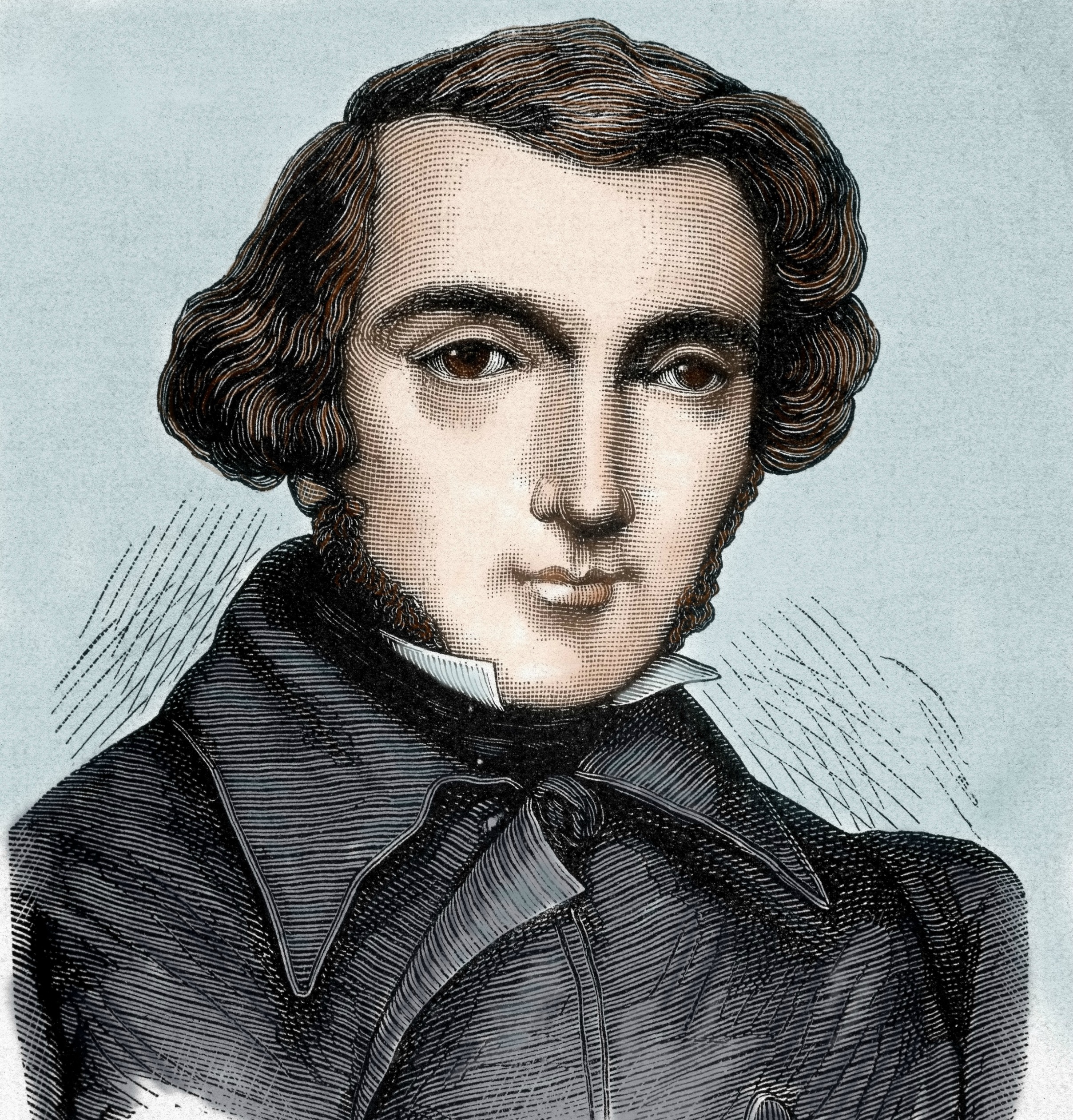
This insight, which comes from the 18th century philosopher Montesquieu, was famously applied to the United States by Alexis de Tocqueville in his book “Democracy in America,” in which he observed that America owes its freedom not so much to the law as to the “habits of the heart” of freedom-loving American citizens.

Alexis de Tocqueville. (Photo: CreditAlbum / Prisma/Newscom)

Alexis de Tocqueville. (Photo: CreditAlbum / Prisma/Newscom)

The illiberal left is eradicating these “habits of the heart” so Americans won’t even remember what it was like to be able to speak freely without fear of retaliation from a silencing mob or a few disgruntled lefties.

“Mankind ought to have a rational assurance that all objections have been satisfactorily answered; and how are they to be answered if that which requires to be answered is not spoken?” asked British philosopher John Stuart Mill in “On Liberty.” “Or how can the answer be known to be satisfactory, if the objectors have no opportunity of showing that it is unsatisfactory?”

The more success the illiberal left has in terrorizing people who express dissenting views, the fewer objections there will be. Most people understandably just want to do their jobs and support their families. Given the choice between being shunned by their peers or losing their job for a personal view, they will almost always choose silence over confrontation.

Because of this, society should always err on the side of respecting people’s right to determine their own beliefs and express them without fear of official or unofficial retribution. Debate and persuasion should be the reflexive response to disagreement and even harmful propositions, not an authoritarian impulse to silence. It should be so not only because it is just, but because no society can flourish without the clash of ideas.

Harvard psychology professor and bestselling author Steven Pinker invoked the critical role free speech plays in a democratic system in a 2014 speech. We acquire knowledge through a “process that Karl Popper called conjecture and refutation,” said Pinker. “We come up with ideas about the nature of reality, and test them against that reality, allowing the world to falsify the mistaken ones. The ‘conjecture’ part of this formula, of course, presupposes the exercise of free speech. We offer conjectures without any prior assurance they are correct. It is only by bruiting ideas and seeing which ones withstand attempts to refute them that we acquire knowledge.”

The illiberal left seeks to short-circuit this process. They don’t want to defend their views, nor do they want to allow forums for other people to present views that are at odds with the conclusions they have drawn on an array of issues. Sometimes, the mere suggestion of holding a debate is cast as an offense.

Environmentalist Robert F. Kennedy Jr. said in a September 2014 interview of those who deny climate change, “I wish that there were a law you could punish them under.”

Pinker singled out university campuses for their hostility to free speech, likening them to the worst authoritarian regimes in history. “It may seem outlandish to link American campus freedom—which by historical and global standards is still admirably high—to the world’s brutal regimes,” Pinker said.

“But I’m here to tell you that the connection is not that far-fetched. This morning I woke up in Oslo, after having addressed the Oslo Freedom Forum, a kind of TED for political dissidents. I met people who escaped from North Korea by walking across the Gobi Desert in winter; people who were jailed for a single tweet; people whose families were thrown in prison because of their own political activity. These stories put the relatively minor restrictions on campus speech in perspective.

But the American commitment to unfettered speech, unrivaled even by our democratic allies in Europe, stands as a beacon of inspiration to the world’s dissidents, one of the few features of the American brand that still commands global admiration. At least one speaker at the Forum singled out speech codes and other restrictions on expression in the United States as a worrisome development.”

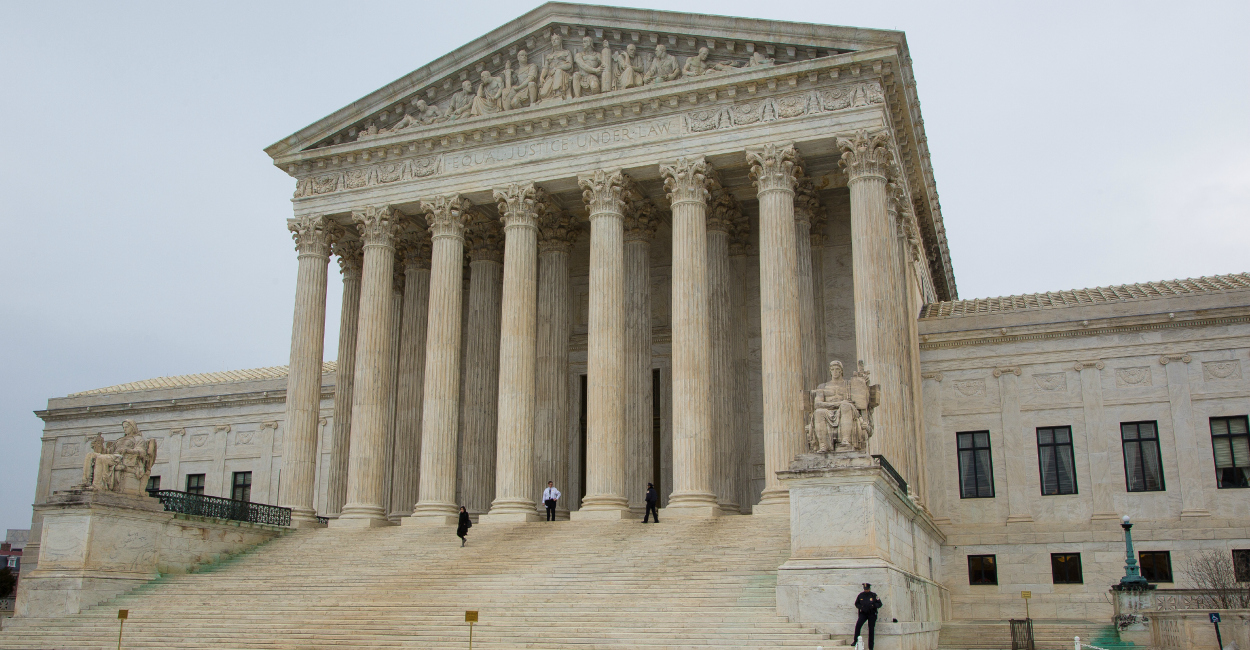
The Supreme Court. (Photo: Jeff Malet Photography/Newscom)

The Supreme Court. (Photo: Jeff Malet Photography/Newscom)

The behavior of the illiberal left flies in the face of decades of jurisprudence forged by liberal Supreme Court justices who argued for an expansive view of the First Amendment and treated free speech as a precious commodity to be guarded jealously. “Those who won our independence believed … that freedom to think as you will and to speak as you think are means indispensable to the discovery and spread of political truth,” wrote Supreme Court Justice Louis D. Brandeis in 1927. “The path of safety lies in the opportunity to discuss freely supposed grievances and proposed remedies; and that the fitting remedy for evil counsels is good ones.” This does not become less true outside of Uncle Sam’s shadow.

Supreme Court Justice William Brennan Jr.—a liberal lion known for his outspoken progressive views—was perhaps the strongest First Amendment advocate of the modern era. Appointed in 1956, Brennan participated in 252 free speech cases during his 34-year tenure on the Court. In 88 percent of these cases, Brennan sided with the free speech claim. In New York Times v. Sullivan, likely Brennan’s most well-known free speech opinion, he wrote: “We consider this case against the background of a profound national commitment to the principle that debate on public issues should be uninhibited, robust, and wide-open … ”

The illiberal left does not share this commitment. Their burgeoning philosophy in favor of government power to curtail freedom of thought, speech, and conscience is troubling. Environmentalist Robert F. Kennedy Jr.—a graduate of one of the nation’s most elite law schools, the University of Virginia—said in a September 2014 interview of those who deny climate change, “I wish that there were a law you could punish them under.”

Accusing the libertarian Koch brothers of “treason” for disagreeing with his view of climate change, he said they should be “at the Hague with all the other war criminals.” He asked rhetorically, “Do I think the Koch brothers should be tried for reckless endangerment? Absolutely, that is a criminal offense and they ought to be serving time for it.” Kennedy’s penchant for arguing for state action against those who do not share his view of climate change is not new. In 2007, he said in a speech at Live Earth that politicians who are “corporate toadies for companies like Exxon and Southern Company” had committed treason and needed to be treated as traitors. In 2009, he deemed certain coal companies “criminal enterprises” and declared that one company’s CEO “should be in jail … for all of eternity.”

In a 2014 speech, Floyd Abrams, one of the nation’s top First Amendment scholars, himself a lifelong liberal, noted, “It stuns me how many people—educated people, including scholars—seem to believe that the First Amendment should be interpreted as nothing but an extension and embodiment of their generally liberal political views.”

He told me in an interview, “It is accurate to say that … conservative jurists have moved strongly in the direction of more First Amendment protection and liberal jurists have moved markedly in the other direction.” Abrams founded the Floyd Abrams Institute for Freedom of Expression at Yale Law School and noted that of the liberal legal scholars who come to his center, most view the First Amendment as an impediment to progressive policy goals. He says, “Their definition of liberalism is so imbued with their devotion to egalitarianism that they are willing to pay some First Amendment prices to get there.”

Cornell Law School professor Steven H. Shiffrin is a leading scholar of the First Amendment and co-author of a widely used First Amendment casebook. He is also an evangelist for the new progressive view of the First Amendment. Shiffrin gave a 2014 lecture called “The Dark Side of the First Amendment” in which he proclaimed, “The First Amendment is at odds with human dignity” and complained that racist speech was protected despite “its undermining of racial equality.”

University of Chicago Law School professor Eric Posner expressed a similar contempt for free speech when he wrote in Slate, “For the left, the [First] amendment today is like a dear old uncle who enacted heroic deeds in his youth but on occasion says embarrassing things about taboo subjects in his decline.” The time had come to put the nutty uncle back in the attic. Posner was writing in the wake of the riots in the Middle East attributed to a YouTube video. He expressed dismay that the U.S. government was prevented by U.S. law “from restricting the distribution of a video that causes violence abroad and damages America’s reputation.” As he wrote, “The rest of the world—and not just Muslims—see no sense in the First Amendment.”

Posner and Shiffrin are influential legal scholars and they are not alone in their views. Their intolerance of free speech that leads to what they deem the wrong policy conclusions or offends the wrong people is frankly typical of the illiberal left. Today’s progressive legal policy is less likely to treat the First Amendment as a bulwark against government infringement on the free expression of Americans than a roadblock to a progressive ideological agenda.

“What’s coming up through the pipeline should have everyone who cares about freedom of speech very concerned,” FIRE’s President Greg Lukianoff, a graduate of Stanford Law School, told me in an interview. “I’m afraid that a lot of these more tenuous theories that law schools have come up with—that have grown up on campuses—that allow them to punish speech they dislike, while protecting speech they like are going to have increasing presence on the bench at every level and, I’m afraid, eventually on the Supreme Court.”

The more suppressive view of free speech seems to be gaining currency more broadly, especially among younger Americans. According to the 2013 First Amendment Center annual survey, “This year there was a significant increase in those who claimed that the First Amendment goes too far in protecting individual rights.”

The older you are, the less likely it is that you believe the First Amendment’s protections are too robust. Only 23 percent of people over 60 and 24 percent of those between 46 and 60 hold that sentiment. But an astonishing 47 percent of 18- to 30-year-olds say the First Amendment goes too far, and 44 percent of 31- to 45-year-olds agree.

If younger Americans are that accepting of government interference in speech, then how much more tolerant will they be of unofficial silencing?

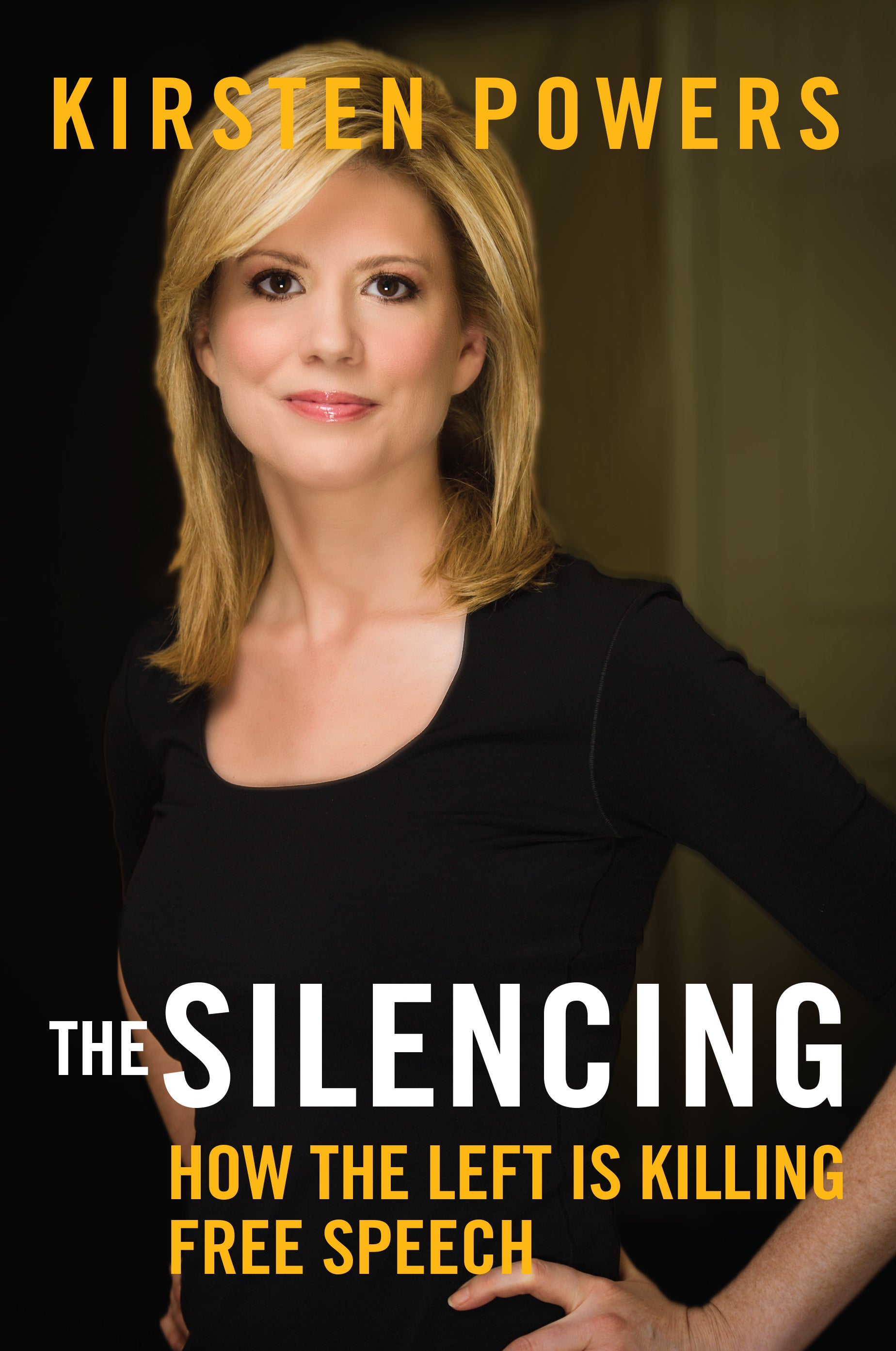
This is an excerpt from “The Silencing: How the Left Is Killing Free Speech,” by Kirsten Powers.

The Silencing - cover (1)


Sent from my iPhone